A Deep Dive into Commercial Viability
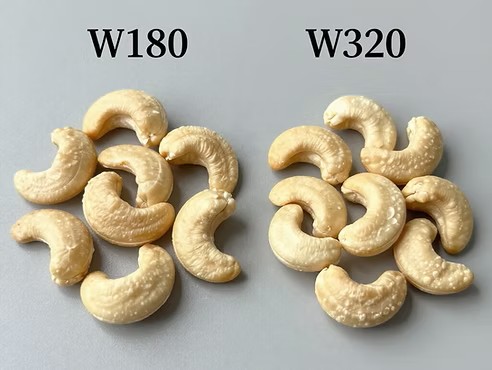
When purchasing cashews in bulk for import or distribution, the price-to-value ratio is the primary driver of decision-making. This article provides a deep dive into the commercial comparison between the premium W180 jumbo cashew and the commodity-standard W320.
The W320: Market Dominance and Liquidity
The W320 grade is the benchmark for the global cashew trade. It represents the highest yield percentage from raw cashew nuts (RCN) during processing.
- Price Stability: Because it is produced in high volumes, the price of W320 is generally more stable and serves as the baseline index for all other cashew grades.
- Liquidity: W320 is highly liquid; it is always in demand across all global markets, from the US to the EU and China, making it a safe and essential stock for any importer.
The W180: The Premium Margin Driver
The W180 grade is rare, typically accounting for a very small percentage of a factory’s total yield. Consequently, its supply is limited, and its price is highly sensitive to crop quality.
- High Margins: While the upfront procurement cost is significantly higher, W180 allows retailers to command exceptional margins. Consumers are willing to pay a disproportionate premium for ‘jumbo’ or ‘colossal’ nuts.
- Brand Positioning: Stocking W180 elevates a brand’s portfolio, signaling quality and luxury to the market.
Strategic Procurement
A balanced commercial strategy involves maintaining a steady, high-volume supply of W320 to satisfy mass-market contracts while securing smaller, strategic volumes of W180 to service high-end retail clients and boost overall portfolio profitability.